
Good Design Isn't Always About Building More…
When homeowners begin thinking about improving their property, the conversation often starts with how much additional space they need. It's a natural starting point. But one of the most important questions we ask as architects is whether more space is actually the answer.
Sometimes, the greatest improvements come not from adding to a building, but from reconsidering how the existing spaces work.
▶︎ House Renovation and Refurbishment: Ruthin, North Wales
Understanding the Space You Already Have
Over time, houses evolve. Rooms take on different functions, families grow, and the way we live changes. What once worked perfectly may no longer suit the people living there.
It's not unusual to find properties with generous floor areas that still feel cramped or disconnected. Poor circulation, underused rooms, awkward layouts and a lack of natural light can all contribute to the feeling that a house is too small.
Before considering an extension, we look at how the existing accommodation is arranged and whether it can work harder.
Removing a wall, relocating a doorway or rethinking the relationship between rooms can sometimes transform the experience of a home without significantly increasing its footprint.
Rethinking Rather Than Extending
A recent example of this approach can be seen in our completed house renovation project in Ruthin, Denbighshire.
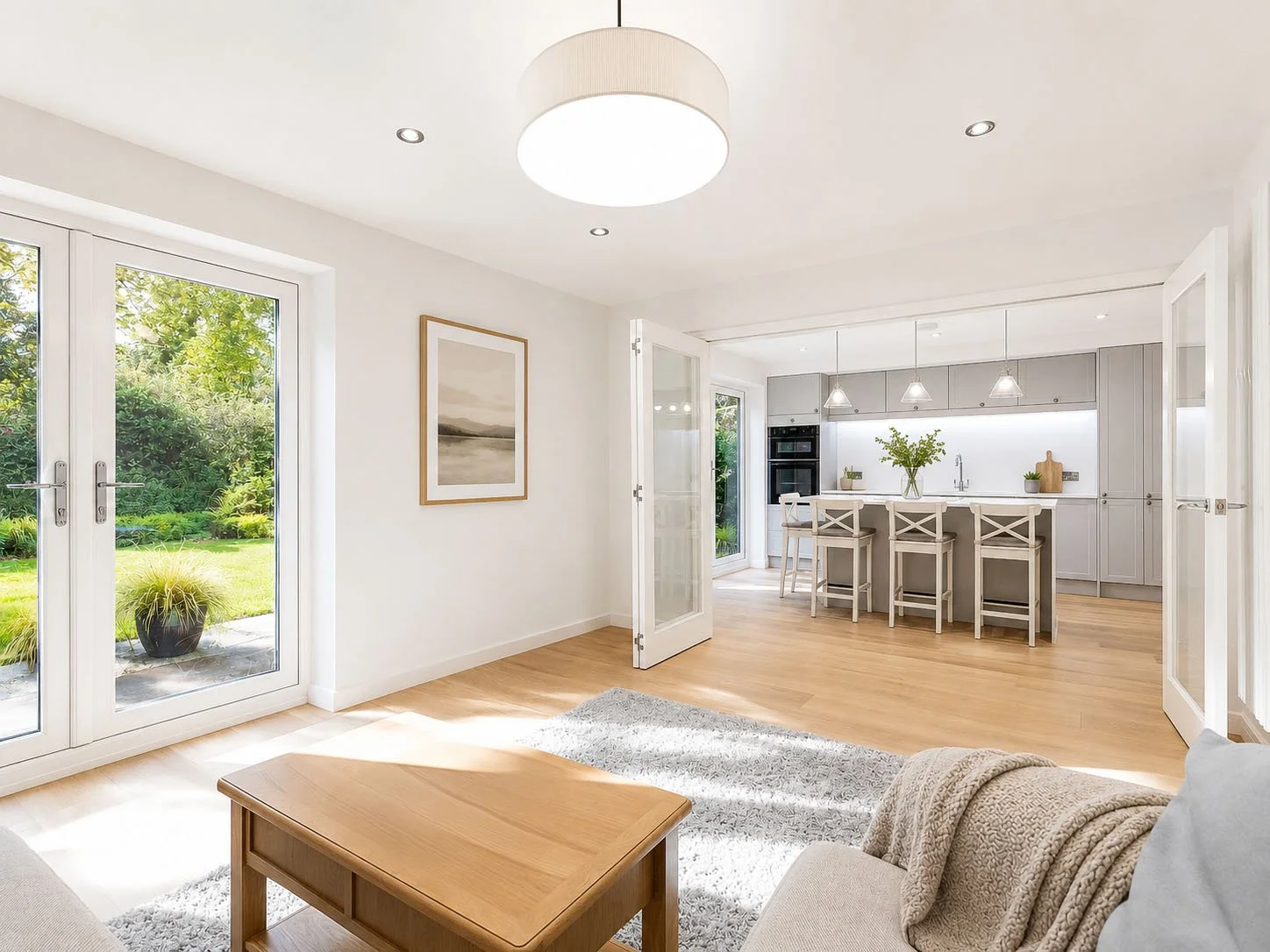
The existing ground floor suffered from a dated and inefficient arrangement, with an oversized hallway, enclosed staircase and poorly connected living spaces. Despite having a reasonable amount of accommodation, the property lacked the openness, natural light and functionality the family wanted.
Rather than increasing the building's footprint, our approach focused on making better use of the space already available.
By reducing the hallway, introducing an open-tread staircase and repositioning the kitchen and dining areas, we were able to establish a much stronger relationship between the principal living spaces.
Natural light could travel further into the centre of the house, while the revised kitchen arrangement improved its connection with the garden. Importantly, practical requirements such as utility and pantry storage were retained.
The result is a home that feels considerably more spacious, connected and adaptable, without the need for a substantial extension.
Quality Over Quantity
Additional floor area doesn't automatically translate into better living space.
A well-proportioned room with good natural light, considered views and a strong connection to the garden can feel far more generous than a larger space that lacks those qualities.
The position of a window, the height of a ceiling or the way one room opens into another can have a considerable influence on how a home feels.
These are often relatively subtle design decisions, but collectively they can make an enormous difference.
Good architecture is about the quality of the space we create, rather than simply the quantity.
Knowing When to Extend
Of course, there are occasions when additional accommodation is genuinely necessary. The challenge is understanding how much is required, where it should be positioned and how it relates to the existing building.
An extension should do more than provide additional square metres. Ideally, it should improve the way the whole property functions.
A modest addition, carefully positioned, might unlock a much better internal arrangement, introduce natural light into previously dark spaces or establish a stronger relationship with the outside.
In some cases, a smaller extension combined with thoughtful alterations to the existing house can achieve more than a substantially larger addition.
It can also offer benefits in terms of construction cost, material use and the amount of garden space retained.
A More Considered Approach
Every property presents its own opportunities and constraints. There isn't a universal solution, and the right approach will always depend on the building, its setting and the people who live there.
For us, the design process begins with understanding those relationships before deciding what needs to change.
Sometimes that means extending. Sometimes it means reconfiguring. Often, it's a combination of the two.
Ultimately, the aim isn't simply to create a bigger house. It's to create a better home.